PLC Board Failure and Diagnostics
6 Oct 2026
A PLC module that has stopped responding does not always mean the whole controller must be replaced. Diagnostics narrows the fault to a module and then to a stage on that module.
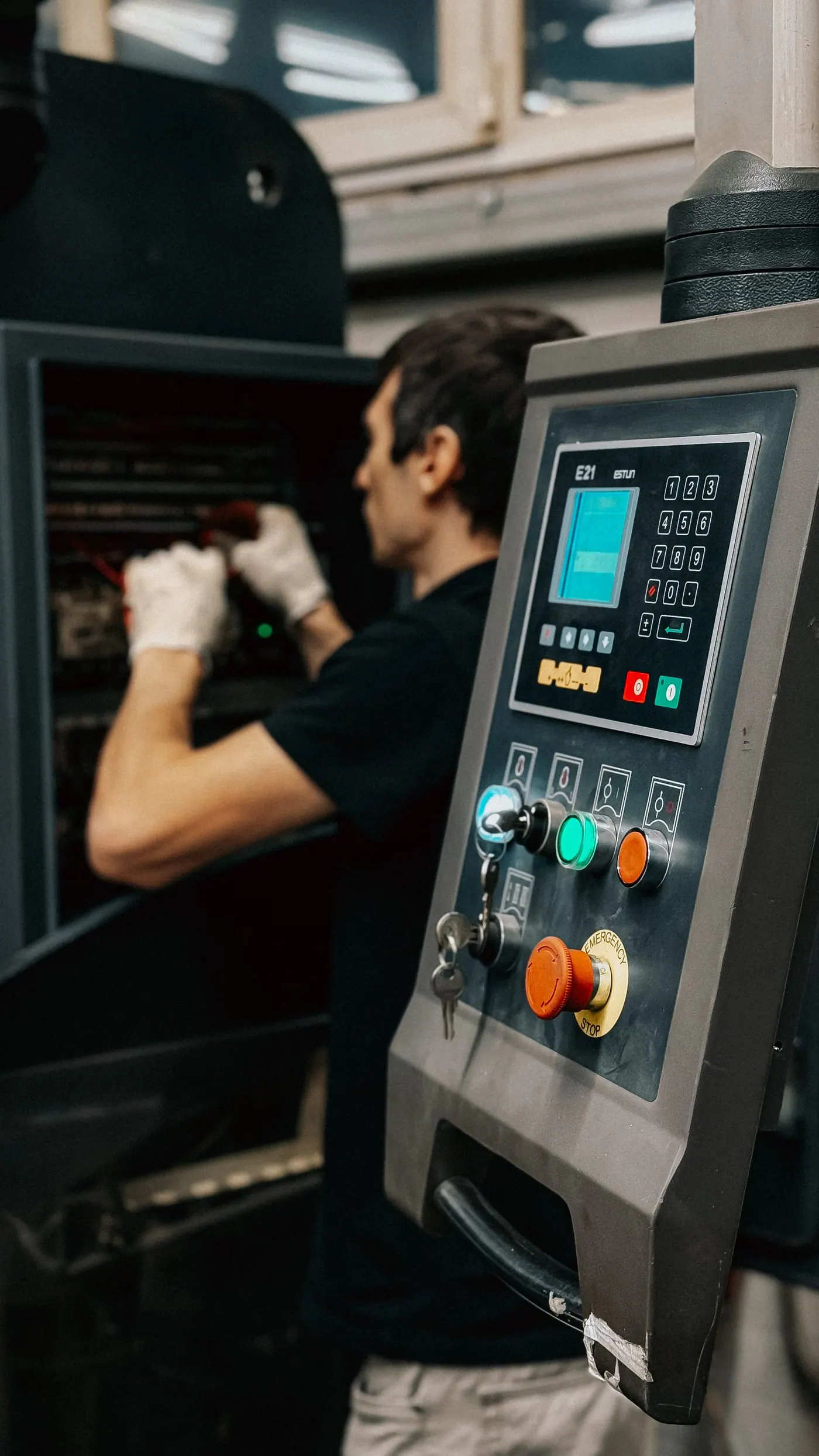
Identify the failed module
Modular PLCs make it possible to isolate the fault to a power module, a CPU, an I/O module or a communication module. Status LEDs and diagnostic indicators on the CPU usually indicate which. Replacing the module with a spare, where one exists, confirms the diagnosis.
Common board-level faults
Power modules fail at switching and rectification parts. I/O modules fail at their input and output protection after overvoltage. Communication modules fail at interface drivers after surges on the lines. CPU boards fail less often, usually after power faults or heat.
Why a safe diagnosis matters
A PLC controls physical equipment. Do not force outputs or bypass interlocks to test a suspect module. Diagnostics on a removed board happens on the bench, where nothing is driven.
Bench diagnostics
On the bench, the module is powered through a current-limited supply. Rails, clocks and I/O stages are measured, and the failed stage is identified. Repair replaces the failed components and the module is tested before it is returned.
Where repair stops
Repair restores the electronics. It does not provide functional-safety re-certification, and programmed-device contents that are locked or encrypted may not be recoverable. Parts availability is confirmed at assessment.
Related Service
Industrial Electronics Repair in Kenya